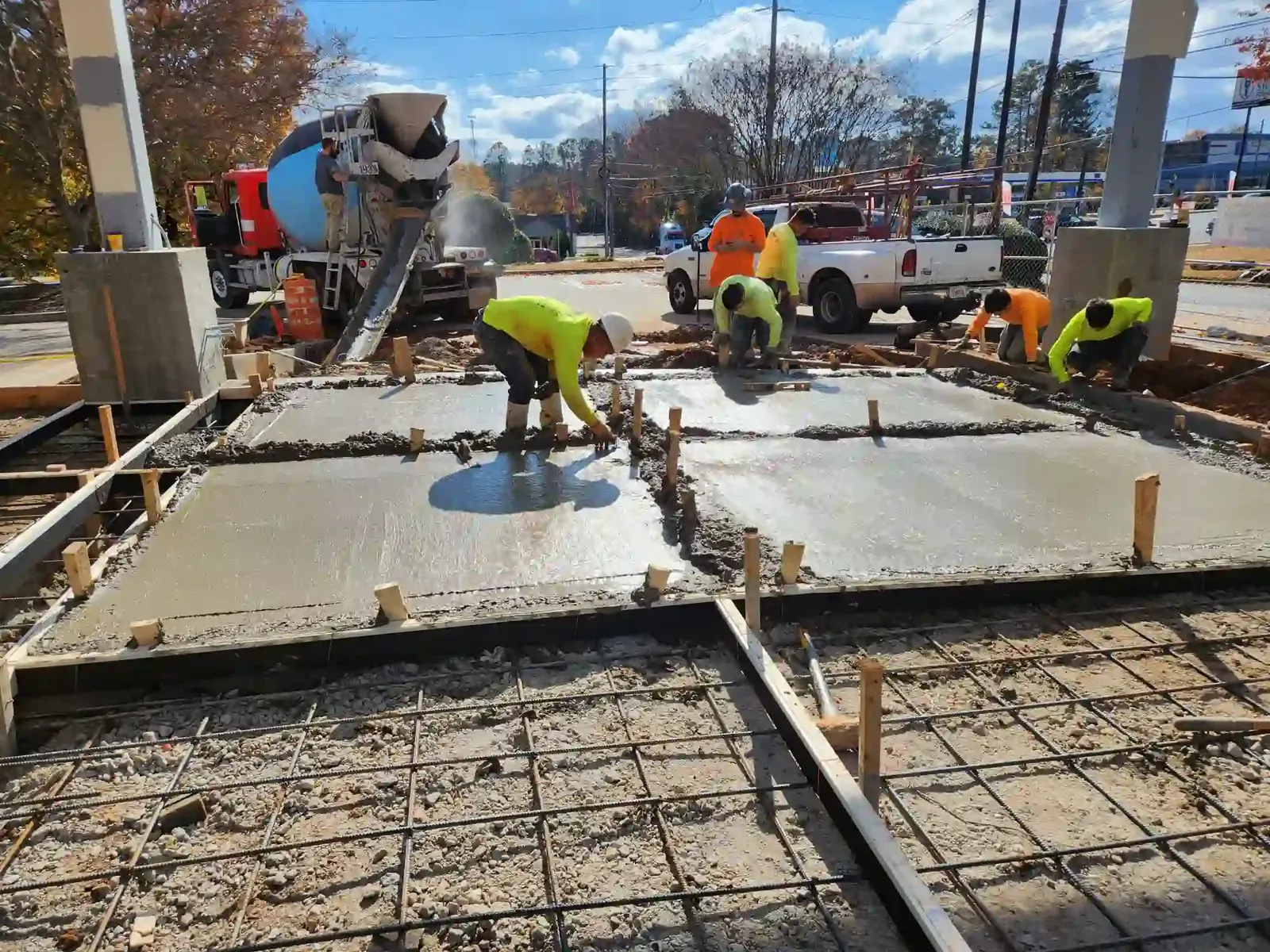
What the clay does to concrete
Expansive clay acts like a sponge. After a week of spring rain, it soaks up water and pushes up. In a dry August, it gives that water back and shrinks, sometimes enough to open cracks in the yard you can put a finger in. A slab sitting on top rides that motion.
The trouble starts when one part of the slab gets wet and another stays dry. A downspout dumping at one corner, a flower bed watered every night, or a low spot that holds rain can swell the clay in one place while the rest sits still. That uneven push is what cracks driveways and tips patio panels.
It also explains why two houses on the same street can have very different driveways. One owner keeps gutters clean and the beds dry near the slab. The other has a sprinkler head soaking the edge every morning. Same clay, same builder, very different results after ten years.
Lake-area and low lots
Lots closer to Lewisville Lake, and low parts of newer subdivisions, have an added challenge. The ground there can stay damp for days after a storm, and we sometimes find soft pockets that will not hold a compactor. Pouring over that is asking for a slab that settles.
Little Elm is also flat. On a hill, water runs off fast. Here, it lingers. That means drainage has to be built into every job on purpose. We set grades so water moves toward the street or a swale, not toward the house or along the slab edge.
How we build a slab for this ground
There is no magic product that stops clay from moving. What works is a set of plain steps done right on every pour. None of them are exotic. The difference is doing every one of them on every job, even the small ones where it is tempting to skip a step:
- Dig out soft, wet, or organic soil until we hit firm ground, and replace it with compacted select fill.
- Compact the base in layers, not in one thick lift, so it does not settle later.
- Use rebar on chairs so the steel sits in the middle of the slab, not on the dirt.
- Thicken the edges where the slab meets soil that will get wet.
- Cut control joints at tight spacing so cracks form in straight lines where we want them.
- Pin new slabs to old ones with dowels so they move together.
- Grade the finished surface so water leaves the slab and heads somewhere useful.
Water management after the pour
The best base in the world struggles if water keeps pooling at the edge. Here is why your yard habits matter. A slab does best when the soil around it stays at a steady moisture level all year.
Point downspouts away from slabs and foundations. Keep sprinklers from soaking the concrete edges. In long dry spells, an even soaking around the yard can keep the clay from shrinking away from the slab. Seal joints and cracks so rain does not go straight down to the clay. If a panel has already dropped, concrete leveling can raise it, but fix the water first or it will sink again.
What this means for your budget
Good prep on clay adds some cost, mostly in digging out soft spots, hauling in fill, and extra steel. On most residential jobs, it is a modest share of the total compared to the price of tearing out a failed slab in five years.
When we quote a concrete slab, driveway, or patio, we list the base work as its own line so you can see it. If a lot needs extra fill or drainage work, we tell you why. For heavy loads like boats and RVs, see our guide on boat and RV pads. Questions about your lot? Call (469) 430-2766 and we will come take a look.
One more thing to ask any contractor: what happens if they find soft ground once the old slab is out? A fair quote spells out how extra fill gets priced before work starts, so you are not surprised halfway through the job.
Common questions
Will my new concrete crack on clay?
Most concrete cracks a little over time. Good base work, steel, and joints keep those cracks thin, straight, and inside the joint lines, where they do no harm.
Is fiber mesh enough instead of rebar?
Fiber helps control small surface cracks, but it does not hold a slab together the way rebar does when clay moves. On driveways and heavy-use slabs here, we use rebar.
Can you pour right after a big storm?
Not on soft, soaked ground. We wait until the base firms up or dig out and replace the wet soil. Pouring on mud is how slabs settle.
Does a thicker slab stop clay movement?
Thickness helps a slab carry weight and bridge small soft spots, but it does not stop the clay from swelling. Base prep, steel, joints, and drainage do most of the work.