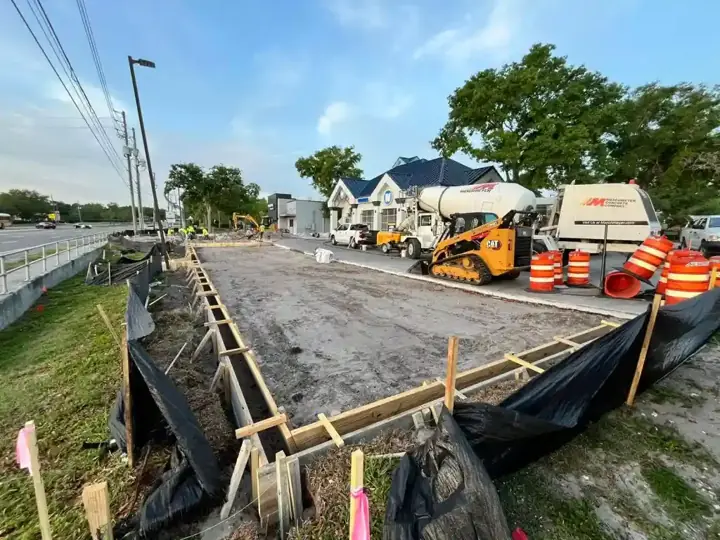
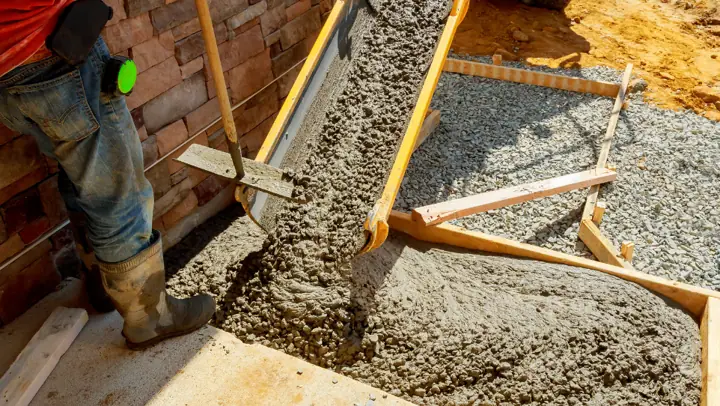
We pour new small lots, add spaces to existing ones, and replace failed sections, mostly for sites along Eldorado Parkway and FM 423. Concrete costs more than asphalt on day one, but it holds up to Texas heat and delivery trucks with far less upkeep.
Small lots, churches, and retail pads
Our commercial work is sized for local owners: a twenty-space lot beside an office, the expansion a church needs as its members grow, a pad site with a few rows of parking in front of a new retail building. These jobs need the same care as a big lot, just without the big-lot overhead.
Churches often want to add parking in phases as budgets allow. Retail owners on the busy corridors want the work done without closing the front door. We plan around both. A lot can be split into sections and poured on weekdays, after hours, or between Sunday services, with barricades keeping customers on the open side.

What goes under the concrete
Car spaces usually run five to six inches thick. Lanes where delivery trucks and trash trucks turn, plus dumpster pads, need more depth and heavier steel. A civil engineer's plan sets those numbers, and we build to it.
Here is why drainage takes so much thought here. Sites along Eldorado Parkway and FM 423 are mostly flat, so water only leaves the lot if we grade it to an inlet or curb cut. On our clay, the subgrade is often treated and topped with crushed base before any concrete goes down. Commercial sites usually need site plan review and permits through the Town of Little Elm, so we start that conversation early.
Concrete or asphalt
Asphalt is cheaper to lay and opens quickly. In a Texas July it goes soft, ruts where trucks sit, and wants a sealcoat on a short cycle. Concrete holds its shape in the heat, bounces light back so the lot reads brighter after dark, and lasts a long time with joint work and the odd panel swap.
If the lot is temporary or the budget is very tight, asphalt can be the right call. If you plan to own the property for years, concrete usually wins over its life. Let's break it down: we can price both for your site so you are comparing real numbers.
Caring for a lot on a busy corridor
After a heavy spring storm, walk the lot and mark every puddle. Check for joints missing their sealant, corner breaks at the dumpster pad, and spalls where trucks turn tight. Catching those early keeps one panel from turning into five.
Restripe every few years so traffic flows and the lot looks cared for. Whenever sections get replaced, check accessible spaces, signs, and ramps against current rules. A clean, bright lot also feels safer after dark, which customers on Eldorado Parkway and FM 423 notice.
Next steps: we walk the property with you, rank the repairs from urgent to later, and hand you a phased written price that fits your calendar and budget.