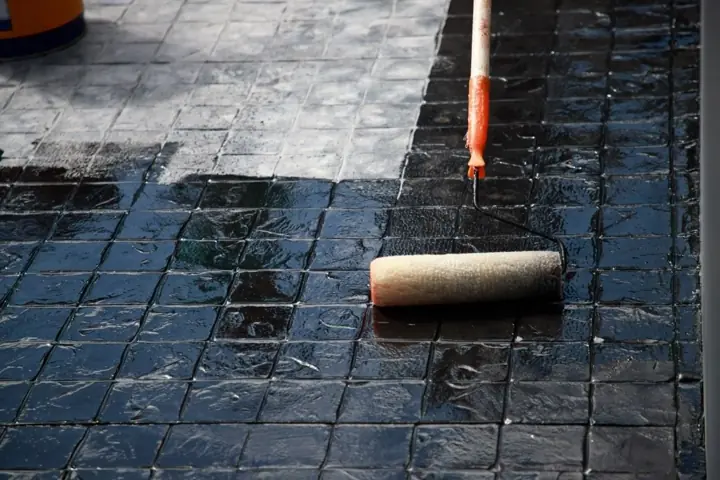
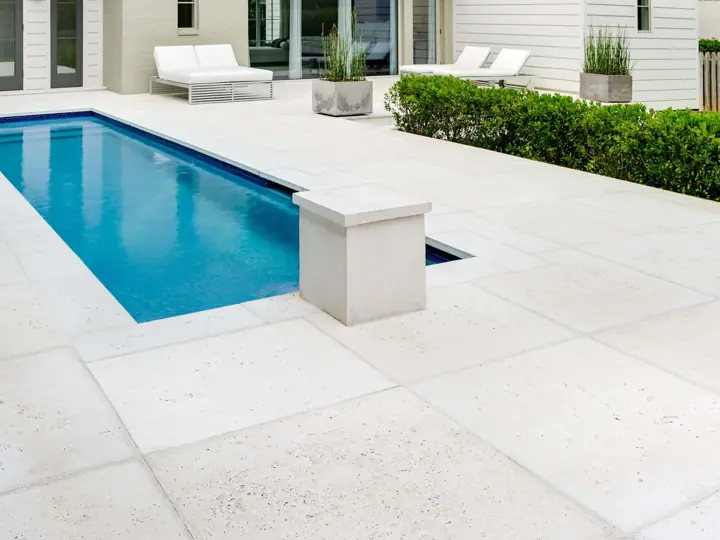
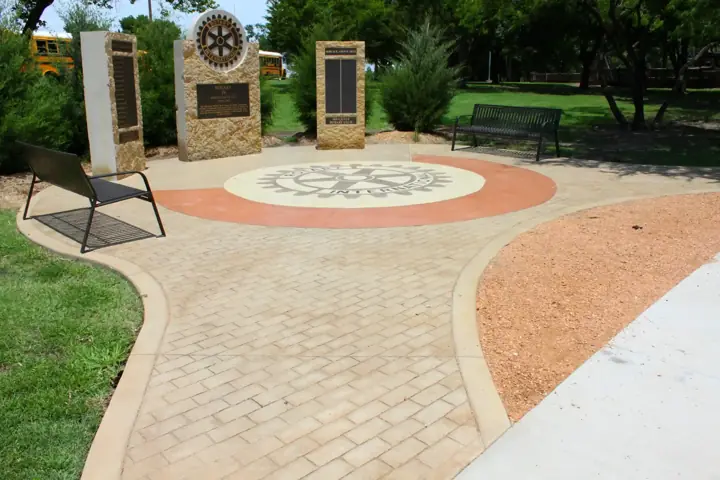
We pour the slab, hold back the top layer of paste, and rinse it away to bring the rock up. The result has real grip underfoot, looks at home next to brick and stone, and hides sandy footprints from the lake far better than smooth concrete.
Why lake homes like it
A house near Lewisville Lake sees wet feet, dripping coolers, and trailers rolling in with mud on the tires. Smooth concrete shows every bit of it, and a sealed smooth slab can feel slick when it is wet. Exposed stone does neither. The texture gives shoes and bare feet a bite, and the speckled color swallows dirt.
That is why we see it most on pool decks, the path from the back door to the dock gear, and driveways that double as a wash bay for the boat. It also suits the Lakefront district look where stone and natural colors are common. If you want your driveway to read a step up from the builder slab next door without a full stamped job, this is the usual answer.
Choosing the stone
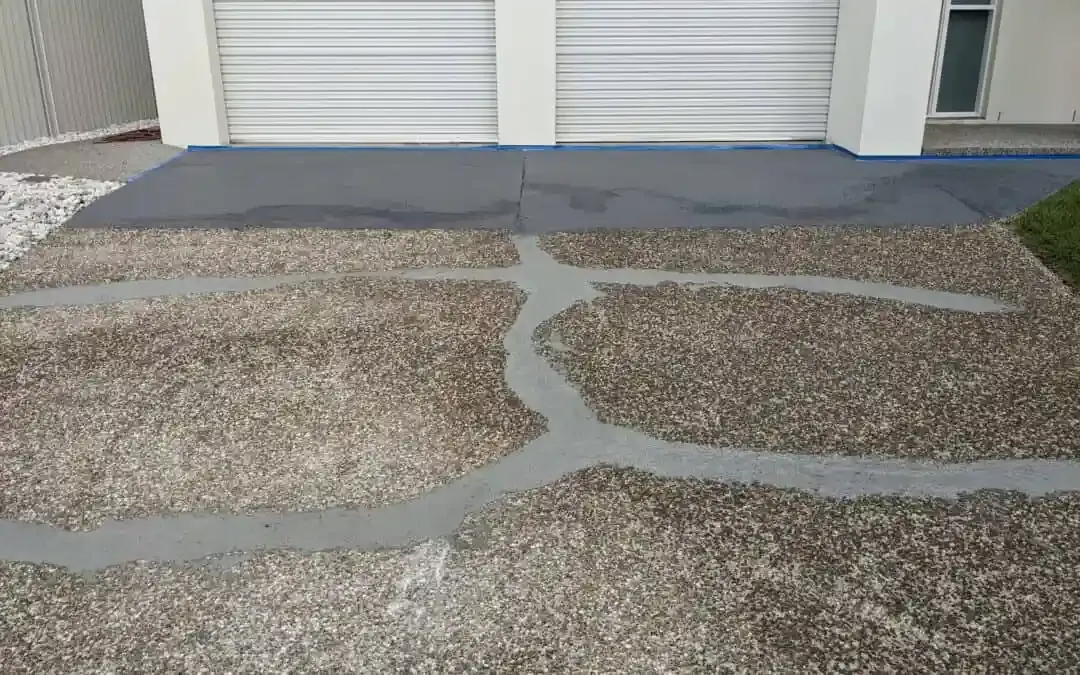
The rock you choose sets the whole look. Rounded river gravel in tan and brown is the common pick and wears soft on bare feet. Smaller pea gravel gives a tighter, finer texture. Crushed stone is sharper and grippier but less friendly around a pool. Some jobs seed extra colored stone onto the top so more of it shows.
Let's break it down. Stand on a finished slab in person before you sign off. A photo hides how big the stones really are and how much paste shows between them. We will also wet a sample for you, since sealer darkens the stone and that wet look is close to how it will read after we seal it.
How we pour and expose it
We place and screed the slab like any other pour, then spray a surface retarder that slows the top sliver of paste. Hours later, the crew brushes and rinses that layer off and the stone comes up clean. We saw the control joints as soon as the concrete is hard enough to cut clean, and a light wash the next morning clears leftover haze.
Timing is the hard part. In a Little Elm July, a slab can go from too soft to too hard in a short window, so summer pours start at first light. Rinse too soon and stones pop loose. Wait too long and the paste locks on for good. That is a judgment call made on site, slab by slab.
Keeping exposed aggregate clean near the lake
Exposed stone asks for very little. A hose rinse each season and a leaf blower in the fall cover most of it. Lake sand and red clay tracked up from the shore rinse right out of the texture. A stiff brush with mild soap handles grill grease and spilled drinks.
Skip strong acid cleaners. They eat the paste that holds the stones and can loosen them. If a stone does pop out after years of use, we can reset it with a bonding agent so the spot disappears.
Plan on a fresh coat of sealer every couple of years, more often on a pool deck in full sun. Next steps: look at a finished slab or two, pick the stone, and book an on-site visit.