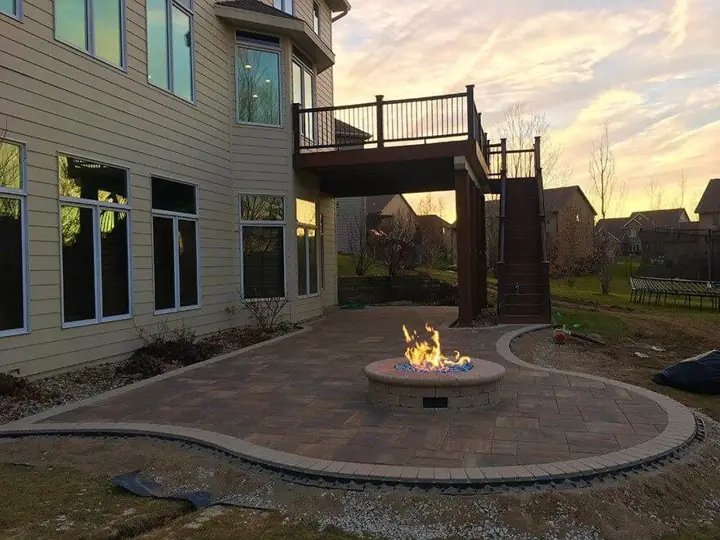
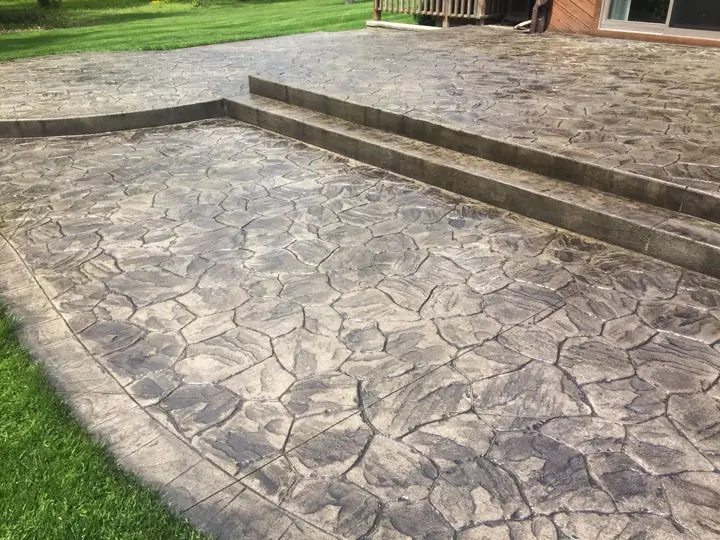
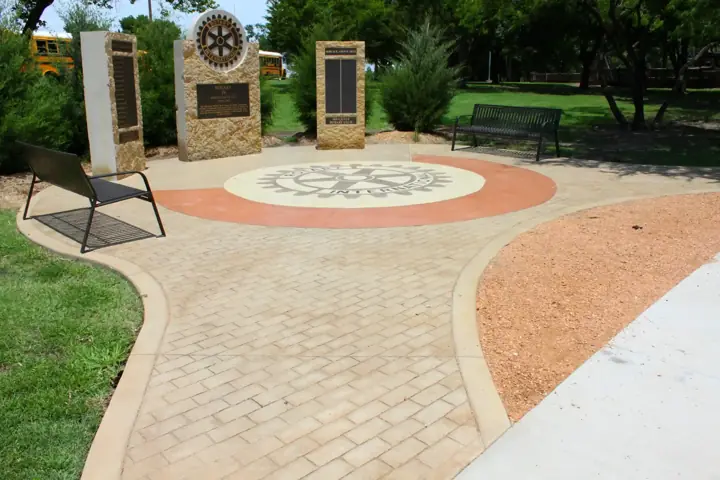
We pour new decks around fresh pools and rebuild or resurface old ones. Our crew coordinates with your pool builder so the coping, the deck, and the drains all come together. The finish is picked for comfort first and looks second.
Working around a new pool
On a new pool, the deck goes in after the shell and coping and before the plaster. We coordinate timing with your pool builder so their equipment is out of the way and the deck can be poured in one clean push. Expansion material goes between the coping and the deck so the two can move separately.
We also plan for what goes on the deck: a ledge for loungers, a spot for an umbrella sleeve, deck drains, and any lighting or plumbing lines that need to run under the slab.
Already have a pool and just need the deck replaced? We cut the old deck away from the coping carefully, haul it out through the side yard, and pour the new deck to the same height so the coping does not need to be reset.
Keeping feet cool and dry
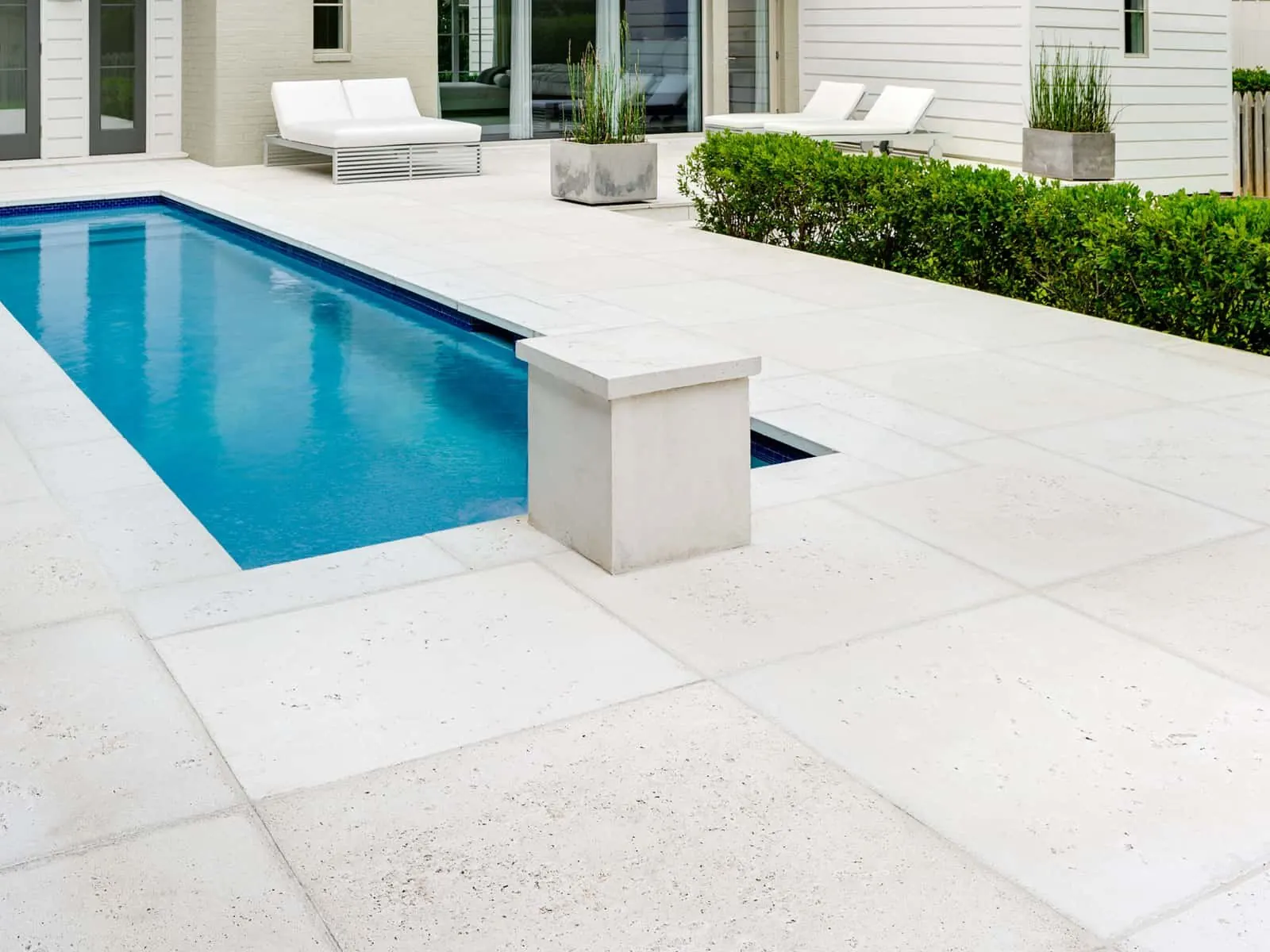
Dark concrete in a July sun gets hot enough to hurt. We steer most clients toward light colors and finishes that hold less heat, like a light broom, a knock-down texture, or a cool-deck coating. Exposed aggregate with small, light stone is another good choice.
For grip, texture beats smooth every time. We avoid high-gloss sealers on decks and add grit to the sealer where people walk wet.
Shade helps too. If you plan a pergola or shade sail, tell us before the pour. We can set footings or anchor sleeves in the deck so the posts go in clean later, with no saw cutting through a finished surface.
Drainage on a flat yard
Pool water splashes out, storms dump inches in an hour, and Little Elm backyards are mostly flat. We slope every deck away from the pool edge and toward deck drains or a planned spot in the yard. On tight lots, a channel drain along the fence line carries water out to the side yard.
This keeps dirt and runoff out of the pool, and it keeps the clay under the deck from staying soaked. Wet clay under a deck is the leading cause of the heaved panels and gaps at the coping we see on older pools.
Resurfacing an older deck
If your deck is structurally sound but stained, hot, or dated, an overlay can give it a new surface without tearing it out. We clean and profile the old concrete, fill cracks, and apply a textured coating in a light color.
Resurfacing will not fix a deck that is heaving or has lost its base. In that case we replace the bad panels first and then coat the whole deck so it reads as one surface again.
Lake-house pool decks that stay cool and drain right
Pools are common in Little Elm backyards, and a lot of them sit on lots that are flat and close to the lake. That combination puts drainage at the top of the list. Splash-out and storm water have nowhere to fall to on their own, so we slope the deck away from the coping and set deck drains or a channel drain that carries water past the edge of the yard instead of back toward the pool or the house.
For comfort, we lean on cool-deck style finishes: a light-colored, textured topping troweled over the slab that reflects heat and stays walkable on a July afternoon. A knockdown finish is another good option. Both give bare feet real grip when the deck is wet, which matters with kids running between the pool and the back door. We avoid slick, high-gloss sealers anywhere near the water.
If you are planning a deck around an existing pool, call us before the pool builder finishes the coping. We want a flexible joint between the coping and the deck so the two can move on their own as the clay swells and shrinks. Without that joint, the deck pushes against the pool beam and cracks show up at the coping within a few seasons.