We drill small holes, pump material underneath, and lift the slab while filling the hollow that let it drop. A front walk with a toe-catching lip, a patio tipping back toward the house, or a driveway panel that sank at the garage can be back in line in an afternoon.
Where sinking starts in Little Elm
Most homes here were built in the last twenty-some years, and the soil around them was moved and backfilled during construction. That fill keeps settling for years, so the panels nearest the house, the garage, and the pool are the usual first to drop.
Here is why the lake matters too. Lots in low spots and near the water hold moisture longer, and a flat yard does not move water off on its own. A downspout dumping at one corner can wash fine soil out from under a slab one storm at a time. Then a long dry summer shrinks the clay and opens a gap. The panel settles into it.
Foam or slurry
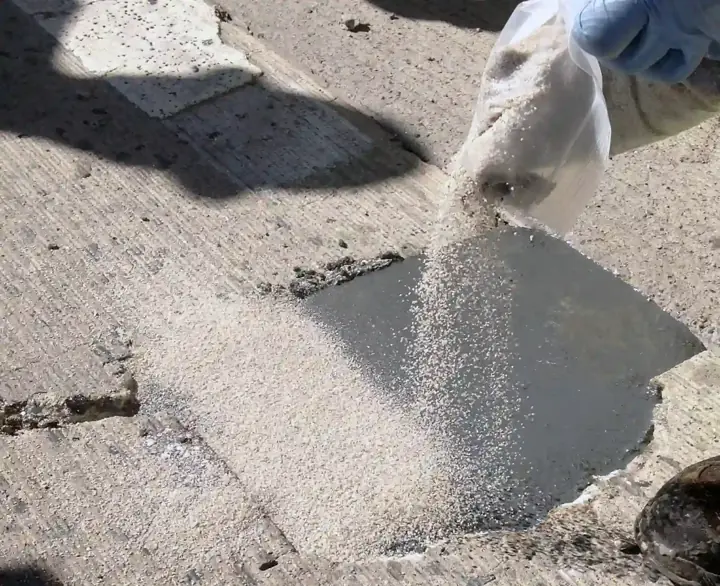
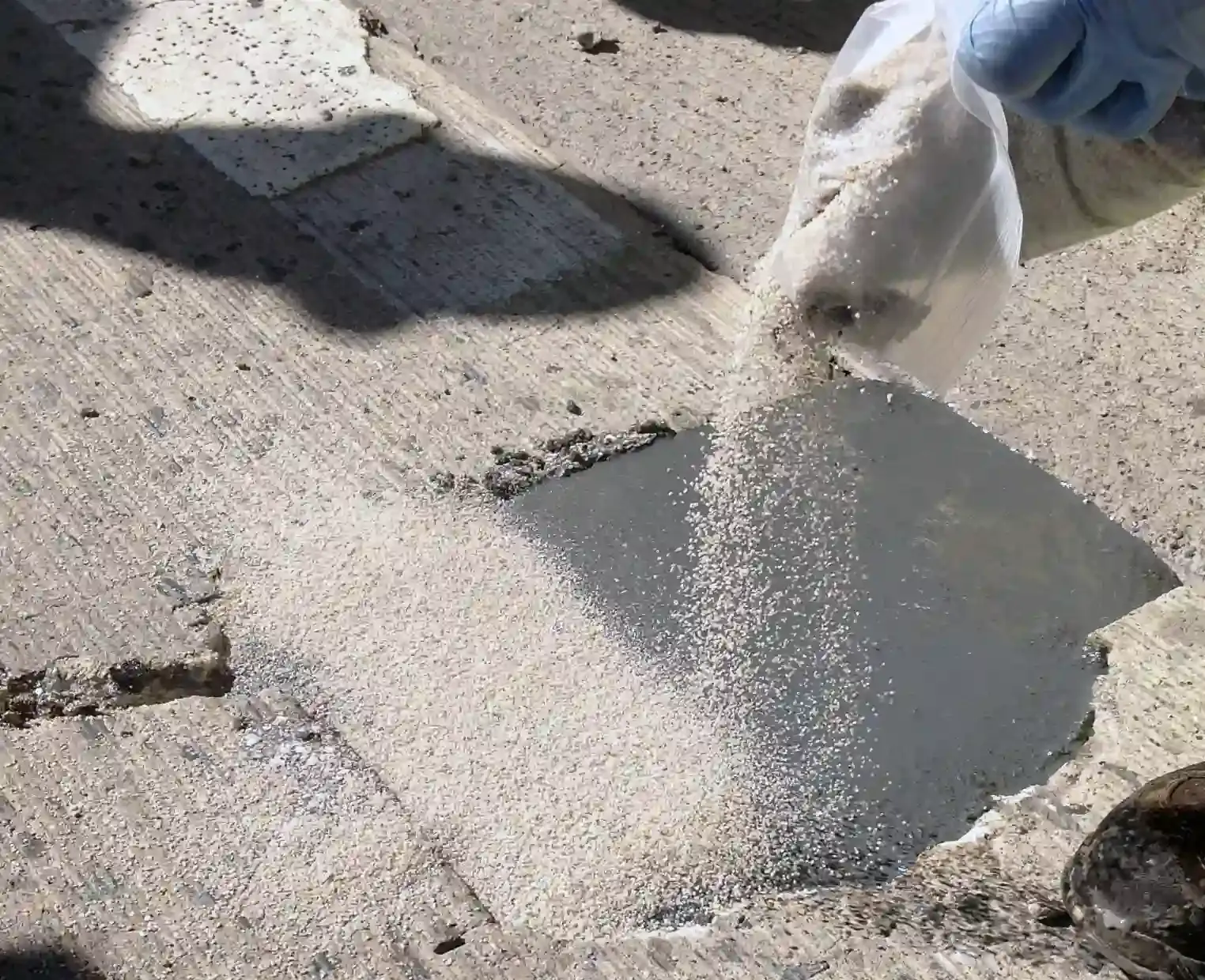
Polyurethane foam goes in through nickel-sized holes. It expands, lifts the slab with fine control, and cures fast, so you can often use the slab the same day. It is light, so it adds almost no weight to soft ground, and it does not wash out. It costs more.
Mudjacking pumps a cement slurry through larger holes. It costs less and fills big voids well, but it is heavy and slower to cure. On the soft, wet ground near the lake, we lean toward foam. On a dry, firm lot with a large void, slurry can make good sense. We price both when it is a close call.
When leveling is the wrong fix
Leveling works on slabs that are still in one piece or a few big pieces. It will not save concrete that is crumbling, shattered into many chunks, or pushed up by a tree root that is still growing. Those panels need to come out.
Leveling also is not foundation repair. If interior doors stick and drywall cracks, call a foundation specialist. Let's break it down: we walk every slab, mark which panels lift and which need replacing, and give you one price for the mix. Most jobs end up part leveling, part replacement, and still cost far less than starting over.
Keeping a lifted slab where it belongs
Lifting is half the job. The other half is stopping the water. We look at where your downspouts empty, where sprinklers soak, and which way the yard falls. On flat Little Elm lots, a downspout extension or a short buried drain line to a lower spot often ends the washout.
Joints come next. Once the panels are back up, we caulk the seam at the house and every panel joint with a flexible sealant. That way the next storm sheds off the top instead of soaking the clay underneath.
Check the slab each spring after the first big storms. A panel that starts to drop again is much cheaper to touch up early than after it has fallen two inches.