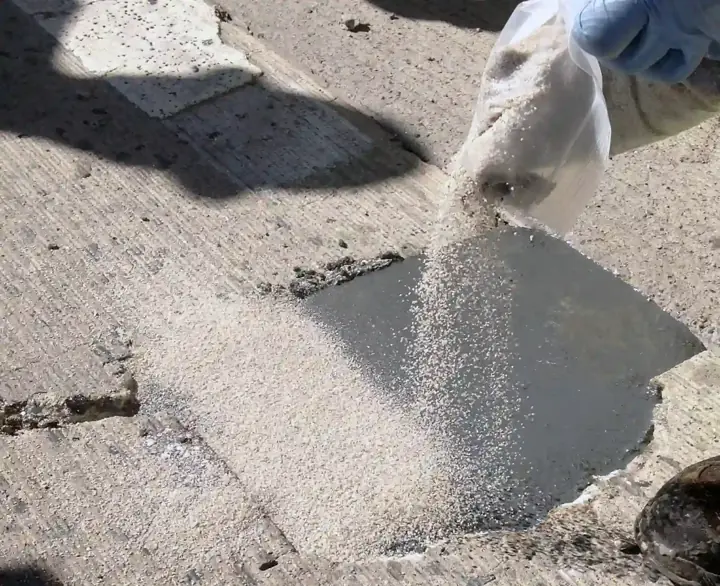
We clean and grind the old surface, fix what needs fixing, and bond a thin cement overlay to it. A pitted builder patio, a flaking front walk, or a stained pool deck can look new without the noise, dust, and cost of a jackhammer.
Good candidates and bad ones
Here is the honest test. Resurfacing is cosmetic. It covers a bad surface, not a bad slab. Scaling from a few hard freezes, pitting, light spalls, rust stains from well water sprinklers, and a finish worn smooth are all good reasons to resurface.
A slab that rocks underfoot, has a corner that dropped, or has a crack you can fit a pencil in that keeps opening is a different story. An overlay will crack right along that line within a season. On our clay, that movement is common, so we check for it first and tell you plainly when leveling or replacement has to come first.
Overlay choices
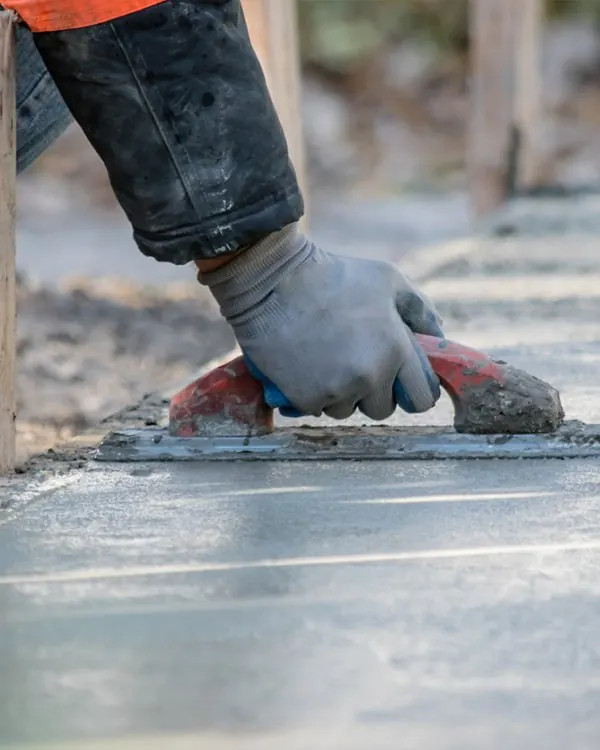
A spray-down overlay goes on thin and gets a knockdown texture that grips well around a pool. A stampable overlay is thick enough to press a stone or slate pattern into, so an old broom patio can pick up a decorative look. A microtopping is the thinnest of all and troweled smooth for a clean, modern finish on steps and patios.
Color can go into the mix or get stained on after, and every system finishes with a sealer. Choose by how the space gets used. A busy back patio with kids and dogs wants texture. A covered porch where you set a nice table can take the smooth finish.
What the job looks like
Prep is most of the work. We pressure wash, then grind the surface so the overlay has something to bite. Cracks get routed and filled, loose patches come out, and we mark every control joint so it carries up through the new layer. Skip the grinding and an overlay peels in sheets.
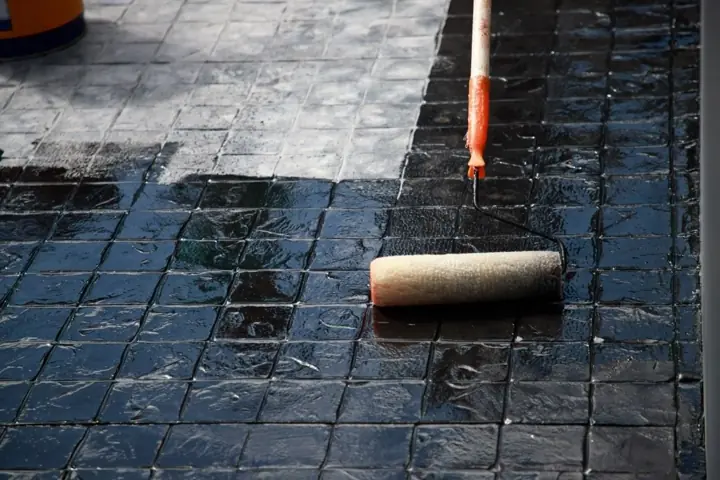
Then the bonding primer goes down, followed by the overlay in thin passes and a sealer to finish. Most patios and walks take two or three days start to finish. You can walk on it the next day and set furniture back after a couple more. Driveway overlays need a few extra days before tires touch them.
A quick check before you call
Walk the slab barefoot or in thin shoes. Any panel that rocks, any edge that dropped, and any crack wider than a pencil running clean across are signs of movement. Note them for us. Those spots get leveled or repaired before an overlay goes on.
Next, tap the surface with a hammer here and there. If it thuds dull and hollow, the top has separated and has to come off during prep. A clear ring tells you the slab is sound. We do the same test on site and price the prep honestly.
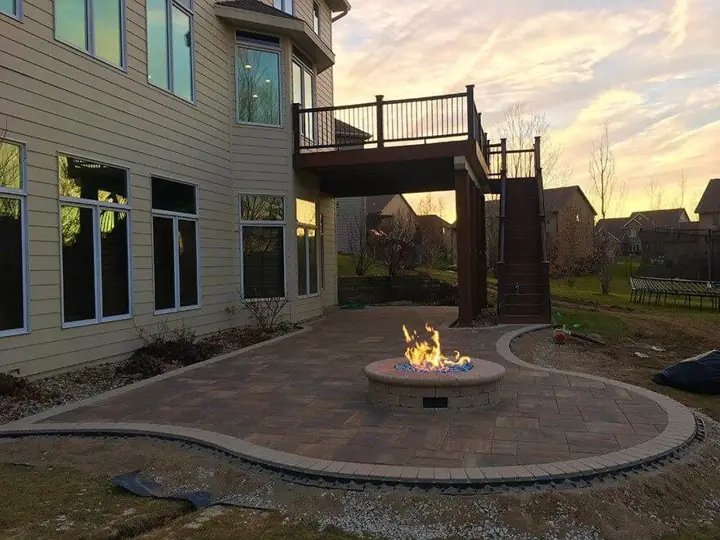
Resurfacing pairs well with a patio extension, a fresh color, or a pool remodel. One overlay across old and new concrete gives you a single matching finish at a fraction of a full repour.