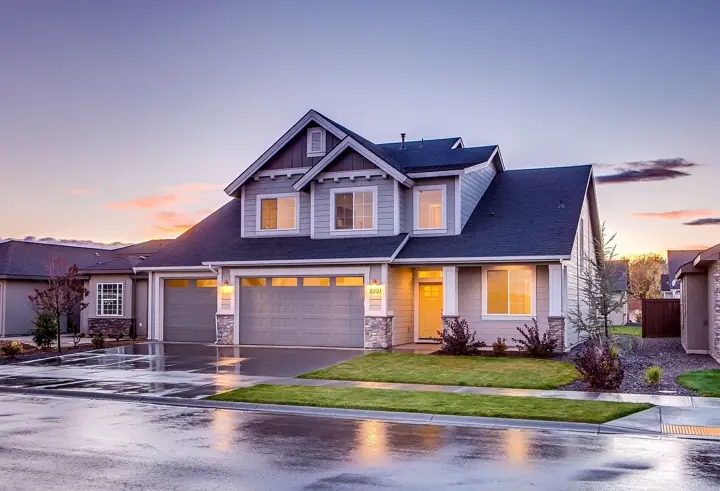
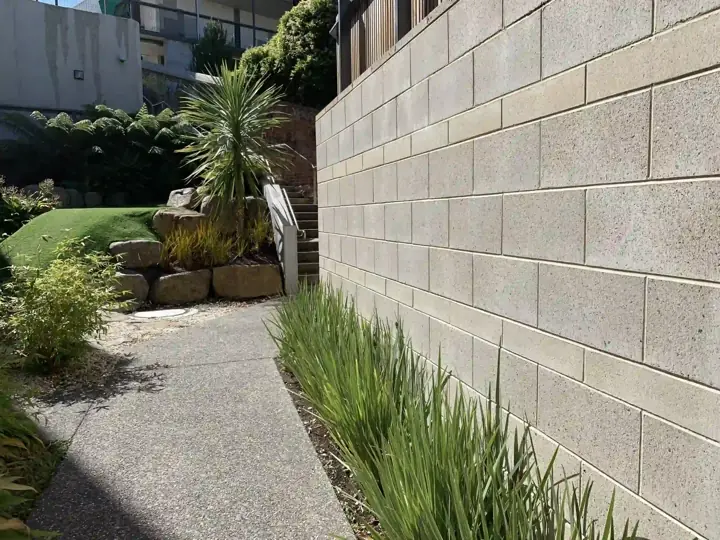
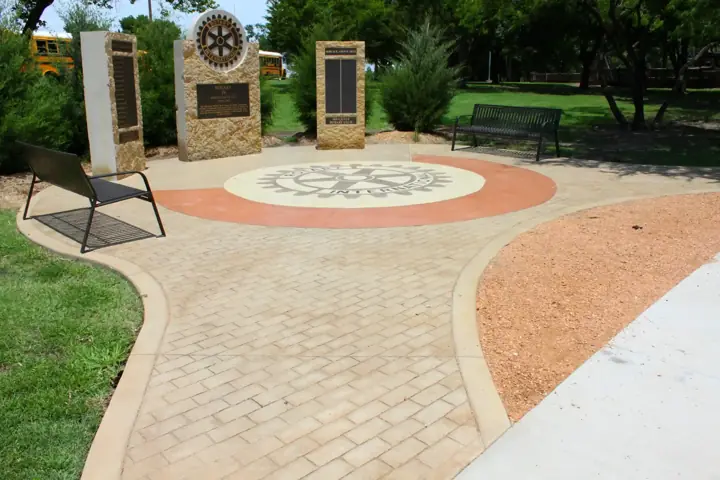
That includes front walks, side-yard paths to the trash cans, garden paths, and entry steps up to a porch. Many newer homes have a narrow builder walk that people want wider or curved. Older homes near Main Street often have steps that have cracked or pulled away from the porch.
Front walks and side paths
A front walk should be wide enough for two people side by side, about four feet for most homes. We lay it out to follow how people really move, not just a straight line from the curb. A gentle curve around a flower bed often looks better and costs only a little more.
Side-yard paths are the unsung workhorse on Little Elm lots. They give you a clean route for trash bins, mowers, and pool supplies, and they keep mud out of the backyard after a storm. We slope them to carry water toward the street or a drain, since side yards between houses tend to hold water.
Next steps: we stake the layout, you walk it with a trash bin or a wheelbarrow, and we adjust before we form. Ten minutes of testing beats living with a path that is just a little too tight.
Steps that feel right
Steps feel safe when every riser is the same height and every tread is the same depth. Even a half-inch difference trips people. We measure the total rise, divide it evenly, and form each step to match.
We pin new steps to the porch or slab so they do not pull away over time, and we add a landing at the door when the plan allows. A light broom finish on each tread gives good grip in the rain.
Finishes and borders
Plain broom finish is the safest and most affordable choice for walks and steps. If you want more curb appeal, a stamped or colored border along each edge dresses up a front walk without making it slick.
Exposed aggregate is another good option for walks, since it hides dirt and gives plenty of traction. We match the finish to your driveway or patio so the whole front of the house looks planned.
Fixing an old walk the right way
Sunken or tilted walk panels are common on older Little Elm streets and in the first phases of the big subdivisions. Tree roots, washed-out soil under the edges, and downspouts that empty onto the walk are the usual culprits.
We remove the bad panels, fix the cause, and pour new ones tied to the slabs that stay. If a root is the problem, we talk with you about root barriers before we pour.
Front walks, side-yard paths, and easy access
Many newer Little Elm homes came with a narrow front walk, often 3 feet wide, that runs straight from the driveway to the porch. Two people cannot walk side by side on it, and it does nothing for the look of the house. We widen it to 4 or 5 feet, add a gentle curve toward the door, or pour a small landing at the porch so guests have room to stand while they ring the bell.
The side yard is the path nobody plans for. On most lots, that strip between houses is where you roll trash cans, mower, and pool supplies to the back gate. It turns to mud after every storm because water from two roofs drains into it. A simple broom-finish path with a slight crown, or a cross slope toward a drain, gives you clean footing and keeps the mud off your shoes.
We also pour ramps and level walks for homeowners planning ahead for a parent, a wheelchair, or a walker. That means a gentle slope, a level landing at the door, a firm non-slip finish, and edges that will not catch a wheel. We can match the ramp to your existing walk so it looks like part of the house, not an add-on.