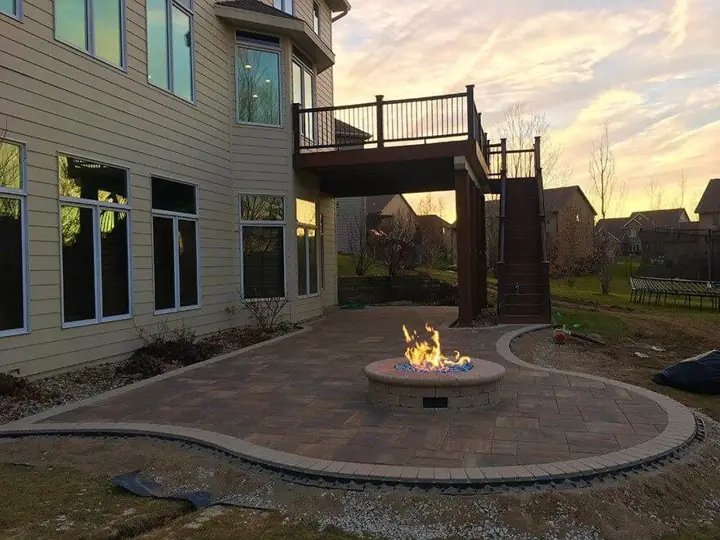
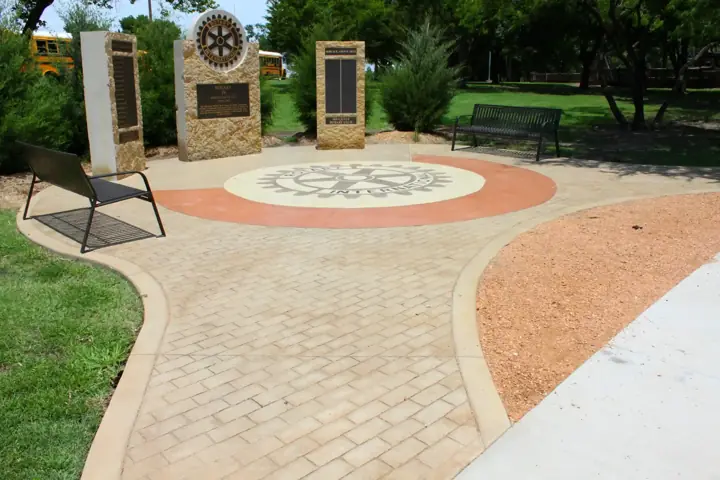
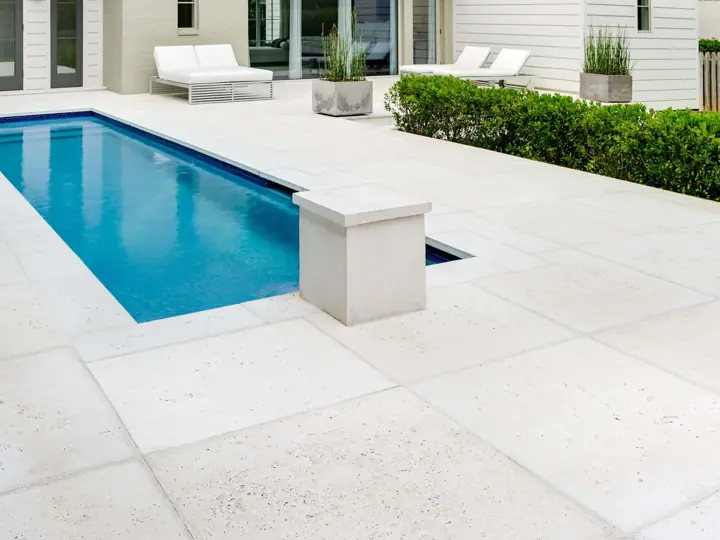
We pour the slab, color it, and press texture mats into the surface while it is still workable. The result is one solid piece with the look of flagstone, slate, brick, or wood plank. It is our most requested upgrade for patios and pool decks around the lake.
How a stamped pour comes together
Stamping is a timing job. We pour and level the slab, broadcast color hardener or work integral color into the mix, then spread a release agent that adds a second, darker tone. When the concrete reaches the right firmness, the crew lays the mats in sequence and tamps them in. Too early and the pattern slumps. Too late and it will not take.
In a Little Elm summer that window can shrink to minutes. We start early in the morning, keep extra hands on stamping days, and size the pour so the crew never falls behind the concrete.
Picking a pattern and color
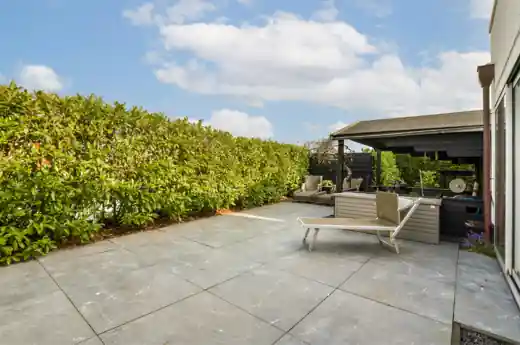
Ashlar slate and random stone are the most forgiving patterns because the eye does not catch small variations. Wood plank and brick look sharp but show any slip in the line, so they suit smaller areas like a front walk or a border band.
For color, look at your brick and roof first. Many newer Little Elm homes use tan, gray, or cream brick, and a patio one or two shades darker usually ties in well. We bring samples to the estimate so you can hold them up against the house in real light.
If you cannot decide, we suggest pouring a small stamped landing or step first. Living with it for a season tells you more than any sample board, and the bigger patio can match it later.
Sealing and upkeep
Stamped concrete needs a sealer. It locks in the color, brings out the contrast in the pattern, and blocks stains from grease, leaves, and pool water. We seal it after the pour has cured, and we add a grit additive anywhere people walk barefoot or wet.
Plan on fresh sealer every 2 or 3 years. Hot sun near the lake fades sealer faster on the south and west sides, so those areas may need it sooner.
Where stamping makes sense and where it does not
Stamping shines on patios, pool decks, front entries, and courtyards, anywhere people stand and look at the surface. It makes less sense on a full driveway in a busy household, since tires and turning wear the sealer faster and the cost adds up over a big area.
A good middle path is a plain driveway with a stamped border or a stamped band at the walk. You get the look where it shows and keep the budget in check.
Getting stamped color past the HOA and onto the right house
Most neighborhoods in Little Elm have an architectural committee, and many of them want to see color and pattern before a stamped patio or front walk goes in. We bring sample boards to the estimate, write down the exact base color and release color, and give you a photo and spec sheet you can attach to the HOA form. That one step saves weeks of back and forth and keeps you from pouring a color the board later asks you to cover.
Pattern choice comes down to the house. A lot of homes built here since the 2000s mix brick with cast stone or limestone trim. Ashlar slate and random stone patterns in warm grays and buff tones sit well next to that mix. Brick-pattern borders work on a front walk that leads to a brick facade. Wood plank looks fit a modern farmhouse build but can look odd on a traditional brick two-story.
Keep the light in mind too. A color that looks rich on a chip in the shade can wash out in full Texas sun, and a deep accent can make a south-facing patio hot underfoot. We set the samples in your own yard at different times of day so you see what you are getting.