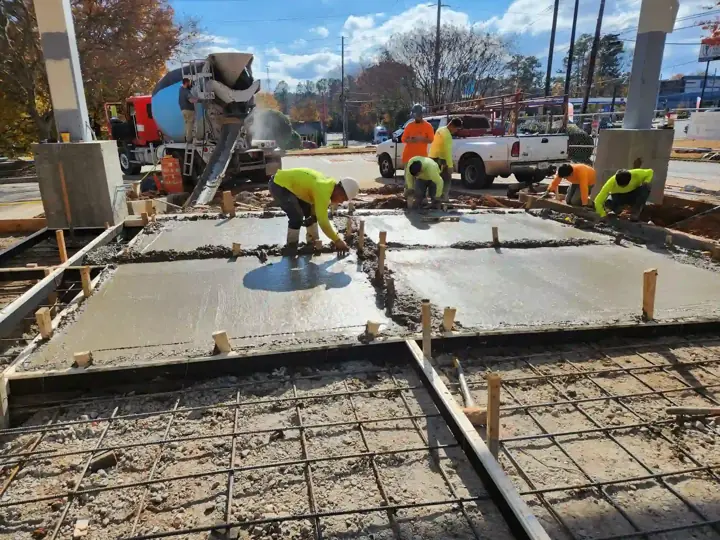
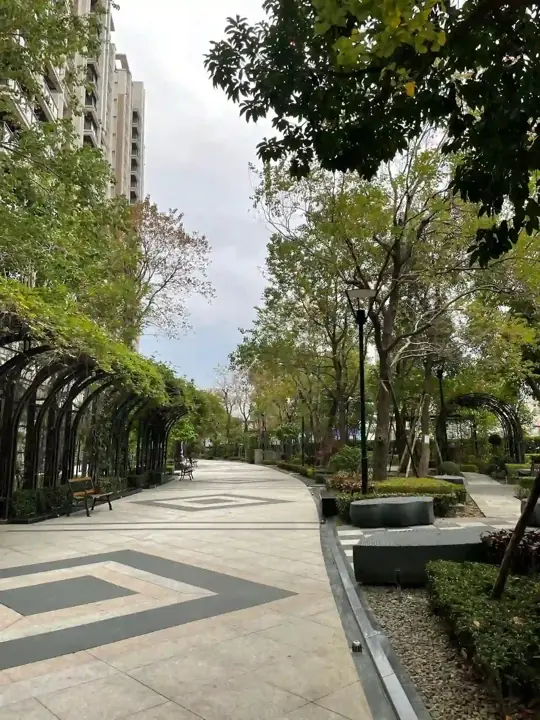
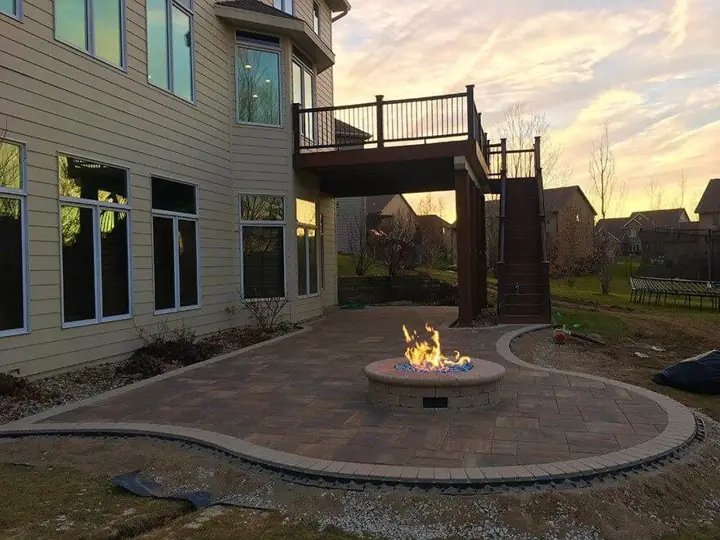
We build poured concrete and block walls for grade changes along fence lines, raised beds, terraced yards, and spots near the lake where soil keeps washing out. Each wall gets a footing, steel or geogrid where it needs it, and drainage behind it. That last part is what keeps a wall standing.
Where Little Elm homes need walls
Even a flat town has grade changes. Newer subdivisions often step lots up or down a foot or two between neighbors, and the builder left a slope at the back fence that keeps sliding. Some lake-adjacent lots have banks that erode a little more with every storm.
Other walls are about the yard you want: a raised planting bed, a seat wall around a patio, or a flat terrace cut into a gentle slope so you can actually use it.
Water is the real load
Dry soil behind a wall is one thing. Saturated clay after three days of spring rain is much heavier, and it pushes hard. Most failed walls we see in town are leaning because nothing let the water out.
Our walls get clean gravel backfill behind them, a perforated drain pipe at the base that daylights to a safe spot, and weep holes where the design calls for them. We grade the top so surface water runs along the wall instead of pouring over it or soaking in behind it.
Poured or block
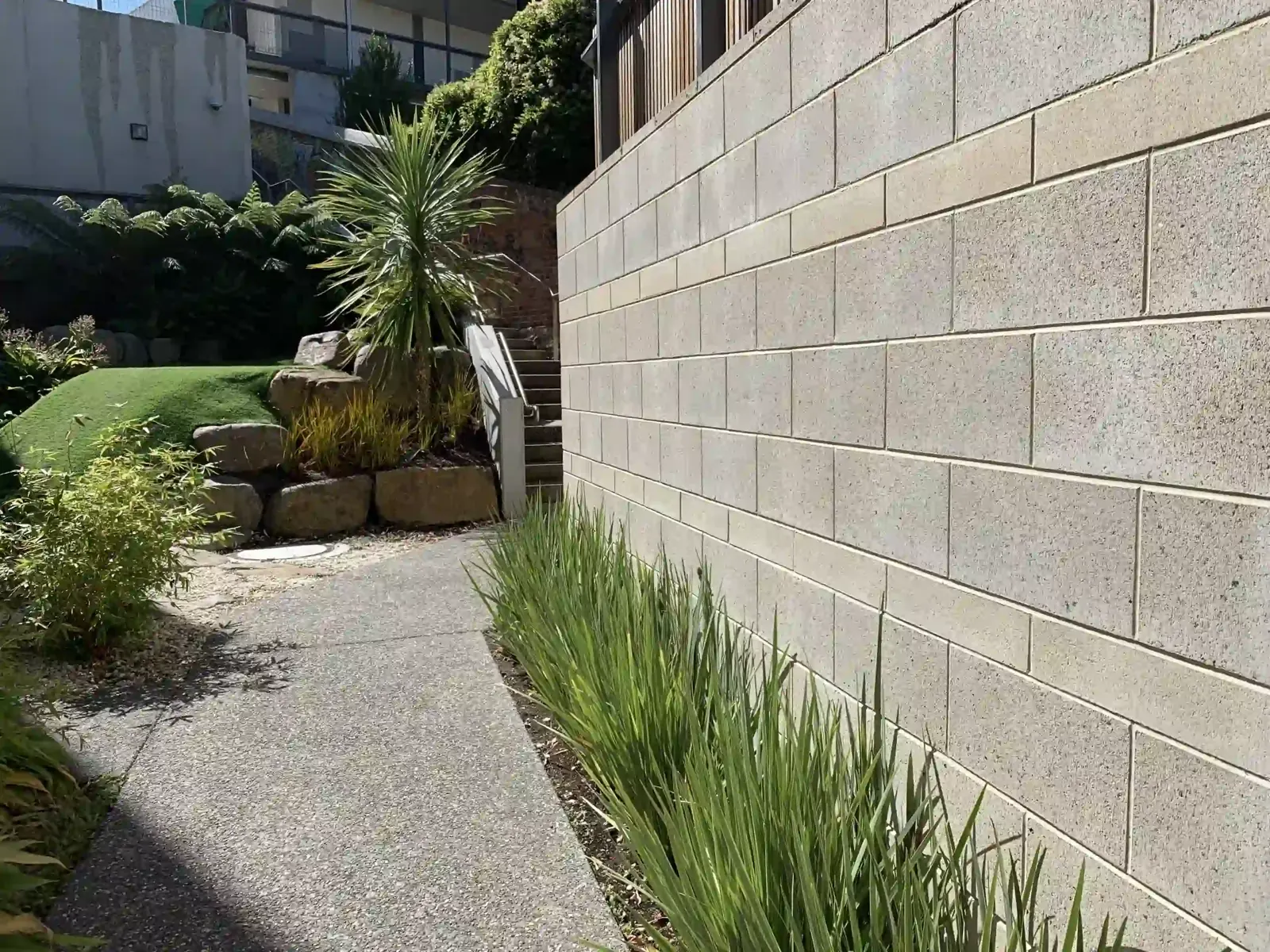
Poured concrete walls are clean and strong and can be formed to curves. They work well for seat walls, planters, and walls that tie into a patio. Segmental block walls go up without forms, handle small movement well, and come in many colors and textures.
We help you pick based on height, look, and budget. Taller walls or walls that hold up a driveway, a pool, or a building need an engineered design, and we check with the Town of Little Elm on what a permit will require.
Caps finish the top and give the wall a built look. A smooth concrete cap doubles as extra seating around a fire pit, and a stone or block cap can match the trim on your house.
Working near the lake
Homes near Lewisville Lake can have softer soil and a higher water table than lots a mile inland. On those sites we dig the footing deeper, use more drainage rock, and pay close attention to where the outlet pipe ends up.
We never run a wall drain toward a neighbor's yard. If there is no good spot to daylight the pipe, we plan a dry well or a route to the street before the first block goes down.
Low walls, lake erosion, and flat-lot grade changes
Little Elm is not hill country, so most retaining walls we build here are short. The most common one is a low wall, 12 to 30 inches tall, that holds a raised garden bed or a planter along the back fence. On a flat lot, that small step up adds shape to the yard and lifts plants out of the soggy clay that stays wet after spring rains.
Fence lines are another reason. When a new subdivision goes in next to an older one, the grades often do not match, and soil from the higher yard slowly slumps against the fence. A low concrete wall at the property line holds that soil back, keeps the fence pickets out of the dirt, and gives you a clean edge to mow against.
Lots that back up to the water or to a drainage channel near the lake deal with real erosion. Wave action and storm runoff can eat away a bank a few inches each year. A wall there needs a proper footing below the soft soil, gravel backfill, and weep holes or a drain pipe so water passes through instead of building up behind it. Taller walls, or any wall holding up a slope or structure, may need an engineered design and a permit from the Town of Little Elm.