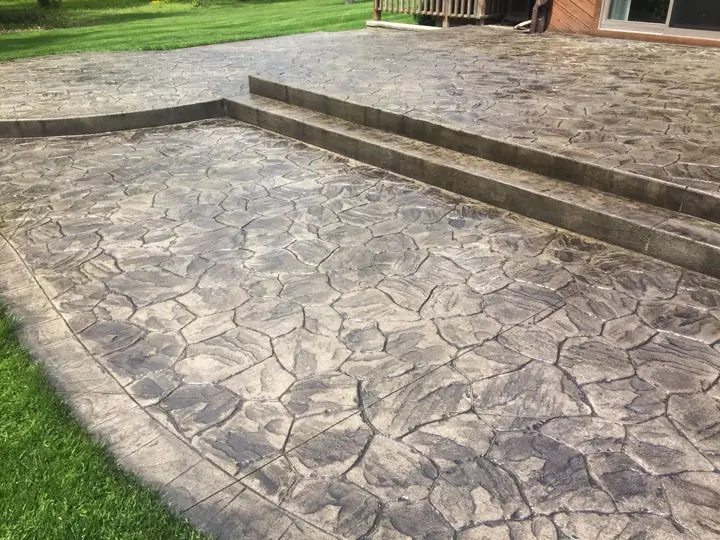
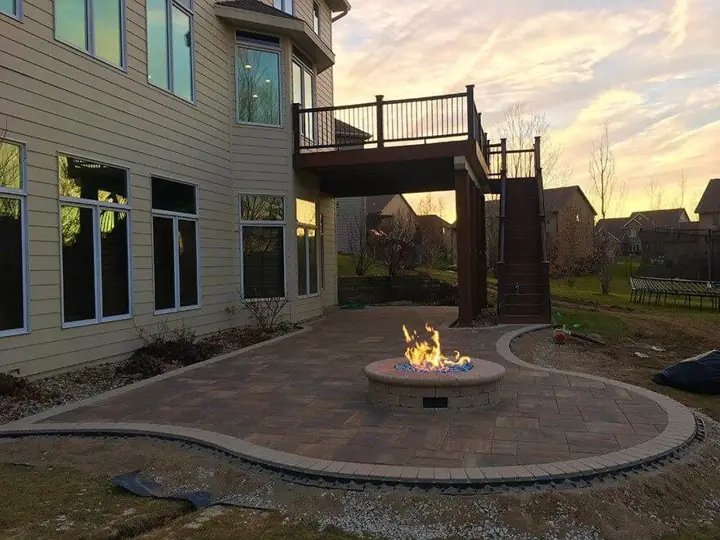
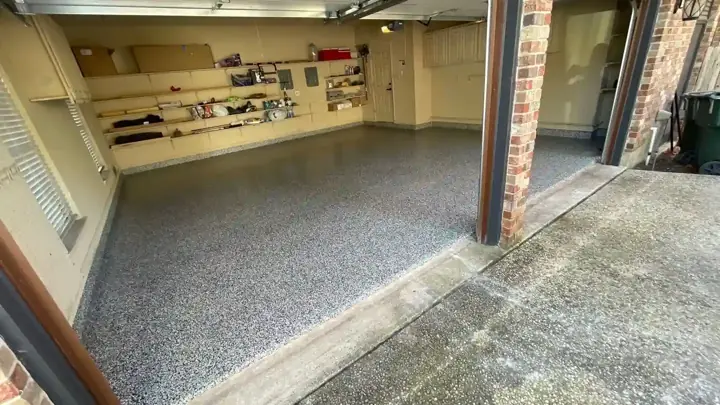
We use these on new pours and, when the slab is sound, on concrete you already have. It is a way to make a patio, entry, or floor look finished without the cost of tile or natural stone. Most of our decorative work mixes two or three techniques on one project.
Finishes we use
Integral color goes into the mix at the plant, so the color runs all the way through and does not wear off. Acid and water-based stains soak into cured concrete and give a mottled, layered look that works well on patios and interior floors. Saw-cut scoring adds lines, diamonds, or a tile grid.
Exposed aggregate washes off the top layer of cement to show the stone underneath. A salt finish leaves small pits across the surface that read as texture and help with grip. Borders and bands in a contrasting color frame a field and make plain concrete look designed.
We also pour colored concrete with a light sandblast finish, which takes the shine off and shows a little of the sand in the mix. It is a quiet, modern look that suits newer homes in Little Elm with simple lines and gray or white brick.

Refreshing a slab you already have
Plenty of Little Elm patios and porches are structurally fine but dull and stained. If the slab is not heaving or badly cracked, we can grind or clean it, then stain, score, and seal it for far less than a new pour.
We check the surface first. Old sealer, paint, or heavy oil has to come off for a stain to take. If the slab has a moving crack across the middle, we tell you up front, since a stain will not hide that for long.
Designs that fit the neighborhood
In HOA communities like Valencia on the Lake and Union Park, front-yard concrete is usually part of the review. Earth tones, a tan or charcoal border, and a light scored pattern tend to pass easily. Bolder color generally works best in the backyard.
We bring color chips and photos of past finishes to the estimate. When it helps, we test a small sample on a hidden spot so you see the real color on your concrete before committing.
Caring for a decorative finish
Decorative concrete is low effort, not no effort. Sweep it, rinse it, and keep leaves from sitting in piles where they can leave tannin stains. Skip harsh acid cleaners, which can dull the color.
When the surface starts to look flat or water stops beading, it is time for fresh sealer. Catching it early keeps a decorative patio looking like the day it was finished.
Stained entries and cooler color choices for Little Elm sun
The front entry is where decorative work pays off fastest on a newer Little Elm home. Many builder porches and front walks are plain gray and start looking tired after a few summers. An acid or water-based stain, paired with saw-cut scoring in a diamond or tile grid, turns that slab into something that looks planned with the house. We can score a border to frame the door or line the joints up with the brick courses.
Color choice matters more here than up north. Dark browns and deep charcoal look great in photos, but on a south or west exposure they soak up heat and get hard to stand on barefoot by mid-afternoon in July. Lighter tans, sandstone, and soft grays stay cooler and hide dust and pollen better. If you want depth, use a darker tone only in the scored lines or a narrow border.
Sealer is the last coat and the one that sets the look. A satin sealer keeps traction on a porch that gets wet from sprinklers or a passing storm, while a higher gloss can work under a covered entry. We recommend resealing every two to three years in this climate, and we will tell you which product we used so you can match it later.