A garage here often doubles as a workshop, a gym, or storage for lake gear, so the floor takes more than tires. A good coating makes oil, salt, and mud easy to clean up. The secret is in the prep work, and that is where we spend the most time.
Fixing the slab before coating it
Coatings fail when they go on over a problem. Before anything else, we check for cracks, pitting, oil-soaked spots, and moisture coming up through the slab. Cracks get filled and ground flush. Pitted areas get patched. Oil stains get degreased or ground out.
Many builder-grade garage floors in Little Elm have a smooth, hard-troweled surface that coatings will not grab. We diamond-grind the entire floor to open the surface so the coating bonds into the concrete instead of sitting on top.
Coating choices
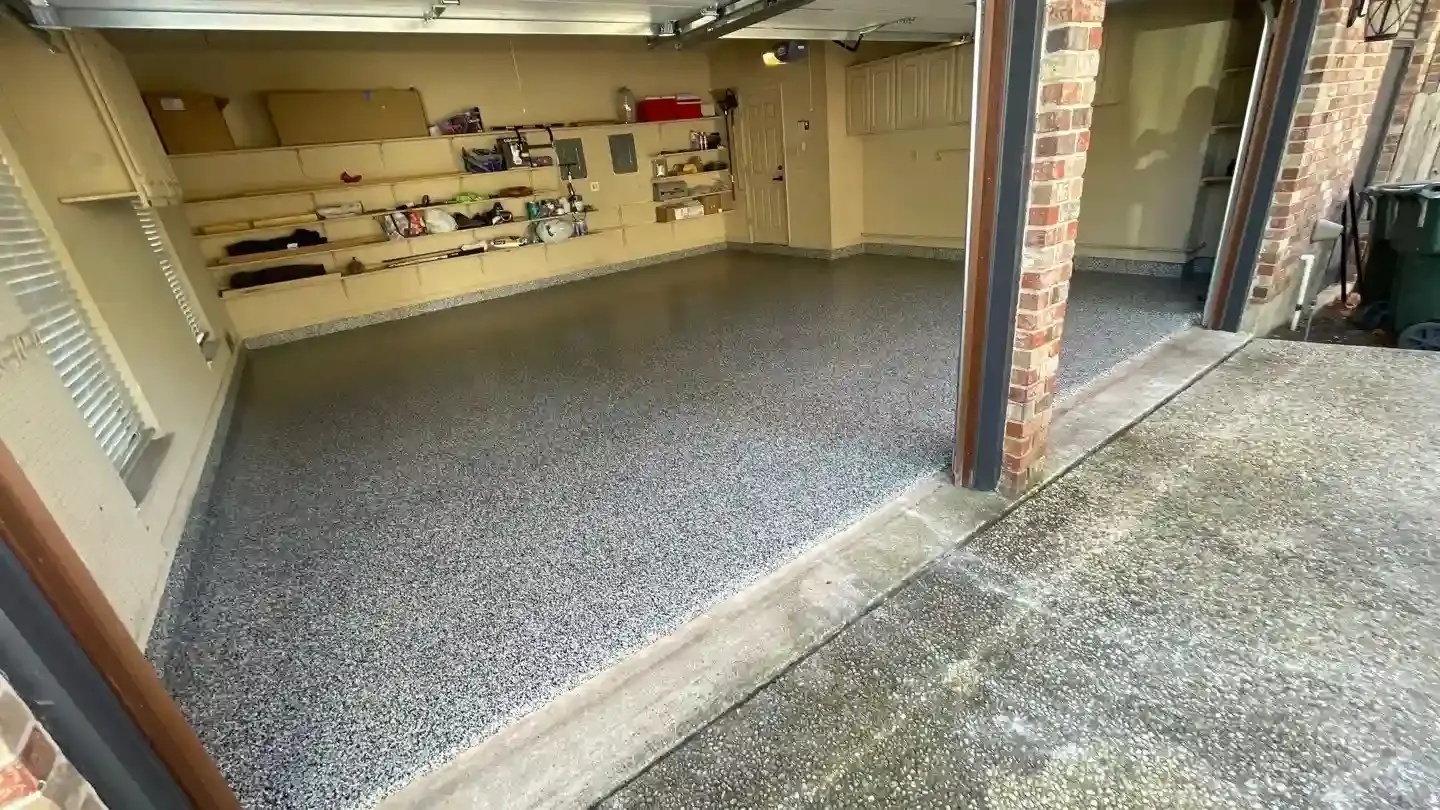
Flake systems are the most popular choice: a base coat, a full broadcast of colored vinyl flakes, and a clear topcoat. The flakes hide dust and small marks and add texture so the floor is not slick. Solid-color epoxy gives a clean, shop look. Polyaspartic topcoats cure fast and resist yellowing in sunlight that comes in when the door is open.
For a gym or workshop, we can add extra grit to the topcoat. For a garage that also stores a boat, we pick a system that handles the occasional puddle of lake water and a heavy trailer jack.
We go over color, flake size, and texture with you at the estimate, using real samples instead of photos on a screen. Light gray flake hides dust best. Darker blends hide tire marks but show lint and sawdust more.
New garage slabs
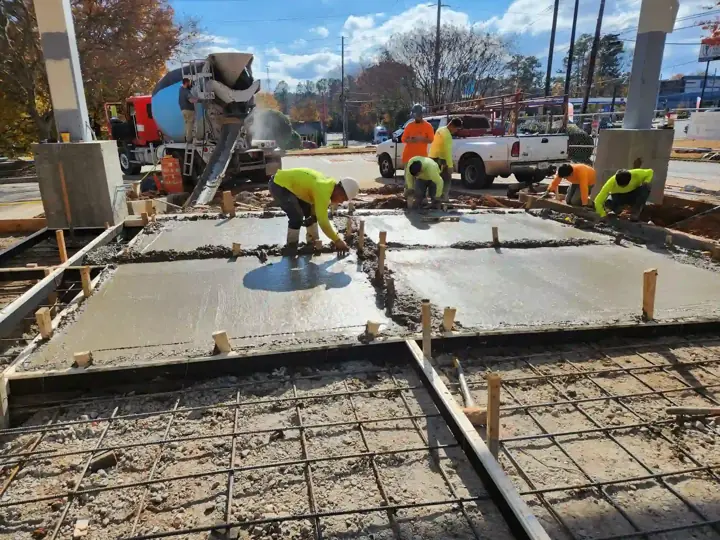
When the existing slab is too far gone, or you are building a new detached garage, we pour fresh. A garage slab gets a vapor barrier, rebar, a compacted base, and a slight slope toward the door so water from a wet car runs out instead of pooling.
If you plan to coat a new slab, we let it cure for about a month first. Coating green concrete traps moisture and leads to bubbles and peeling.
Keeping the floor looking good
A coated floor is easy to care for. Sweep it, use a soft mop with mild soap, and wipe up gas or brake fluid when it happens. Put a mat under any trailer jack or kickstand so it does not dig into the topcoat.
Every few years, a fresh topcoat can bring back the shine on a high-traffic floor. Because the base layers are still bonded, that recoat is quicker and cheaper than the original job.
Hot garages, coatings, and summer moisture
A Little Elm garage in August can run well over 100 degrees, and that heat is hard on floor coatings. Cheap epoxy kits from the store soften, then the hot tires from the car pull them right up. We use coating systems rated for hot-tire pickup and high heat, and we prep the slab by grinding it so the coating bonds into the concrete instead of sitting on top.
Moisture is the other half. Our clay soil holds water after spring storms, and that moisture can push up through a garage slab as vapor, especially in the humid months. We test the slab before we coat it. If the reading is high, we use a moisture-tolerant primer so the floor does not blister or peel later.
Next steps: clear the garage as much as you can, note any oil stains, cracks, or pitted spots, and decide how you use the space. A floor that holds two cars and a boat trailer needs a different system than a home gym or a workshop. Flake colors in gray or tan hide the dust and lake sand that come in on shoes and tires.