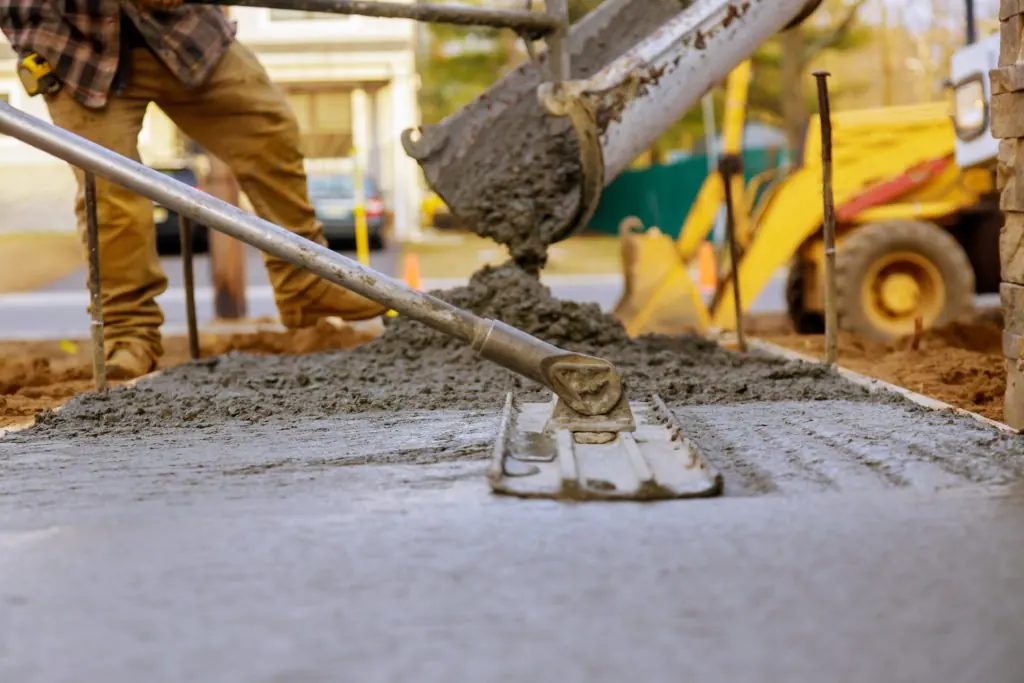
Why weather matters so much
Concrete does not dry. It cures, which is a chemical reaction that needs water and the right temperature. Too hot, and the surface loses water before the slab can set, which leads to cracking and a weak top layer. Too cold, and the reaction slows almost to a stop. Freezing water inside fresh concrete can ruin the surface.
Rain is the other wild card. A hard storm on a fresh slab can pit the finish. A soaked base the day before a pour can mean soft ground under the forms. So when we schedule, we watch temperature, rain, and how wet the ground is all at once.
Wind matters more than people think. A dry south wind on an open lot pulls water off a fresh slab almost as fast as the sun does. On breezy days, we set up windbreaks where we can and keep the finishers close behind the pour so no section sits exposed for long.
Season by season in Little Elm
Here is how the year looks for flatwork from our side of the job. Every year is a little different, so treat this as a pattern, not a promise. A dry March or a mild August can open up dates we would not normally plan on.
| Season | Conditions | What we do |
|---|---|---|
| Spring (Mar to May) | Mild temps, frequent storms | Watch radar, wait out soaked ground, cover fresh work if rain threatens |
| Summer (Jun to Sep) | Very hot, dry, fast set | Pour at dawn, retarder in mix, evaporation control, careful curing |
| Fall (Oct to Nov) | Mild days, cooler nights | Ideal window; book early since it fills up |
| Winter (Dec to Feb) | Mostly mild, some hard freezes | Pour between fronts, use blankets, no deicers in year one |
How we handle summer pours
Most of the year's projects happen in summer, because that is when people want patios and pool decks. We do not avoid summer. We work around it.
- Start early. Our trucks often show up at first light so we finish before the worst heat.
- Wet the base. A dry base pulls water out of the bottom of the slab.
- Adjust the mix. The supplier can add a set retarder to give us more working time.
- Use evaporation control. A spray-on film slows water loss while we finish.
- Cure properly. Curing compound or a wet cure keeps moisture in for the first days.
- Ask owners to help. A light misting the first few evenings makes a real difference.
- Plan for the slab to stay roped off a bit longer. Hot weather cures the top fast, but the slab still needs days to gain strength underneath.
Freezes and winter work
North Texas winters are mostly mild, but we do get hard freezes. Fresh concrete needs to stay above freezing until it gains enough strength, usually a few days. So we look at the forecast for the pour day and the nights after it.
If a cold front is coming, we either move the pour or protect the slab with insulated blankets. A heated mix or an accelerator can help on cool days. Do not use salt or deicers on concrete in its first winter. They can scale the surface. Sand works fine for grip.
Winter does have one upside. The ground tends to be steadier, and crews have more open dates. If you are flexible, a pour between fronts in January or February can get your driveway done well before the spring rush.
Booking and lead time
Spring fills up first. Owners who want a patio ready for Memorial Day should call in late winter. Pool decks follow the pool builders, so if a new pool is going in this spring, get us on the calendar as soon as the dig date is set. Fall is often the best combination of good weather and open dates. Our patio cost guide can help you budget while you wait for a slot.
Rain delays happen. If storms come through, we push the pour a day or two rather than placing concrete on soaked ground. On wet lake-area lots, we may need a few dry days for the base to firm up. Read more in our clay soil guide. Next steps: call (469) 430-2766 to get on the schedule for a driveway, patio, or slab.
Common questions
Is summer a bad time to pour concrete?
Not if the crew plans for it. Early start times, a retarder in the mix, and good curing produce strong slabs in summer. Midday pours in July without those steps are where problems start.
How cold is too cold to pour?
Fresh concrete should not freeze. If nights will drop below freezing in the first few days, we either wait or cover the slab with insulated blankets.
What if it rains right after you pour?
Light rain after the surface has set does little harm. Heavy rain on a fresh slab can mark the finish, so we watch the radar and cover work when storms come in.
How long should I water new concrete?
In hot weather, a light misting in the evenings for the first several days helps the slab cure evenly. We will tell you exactly what to do for your project.