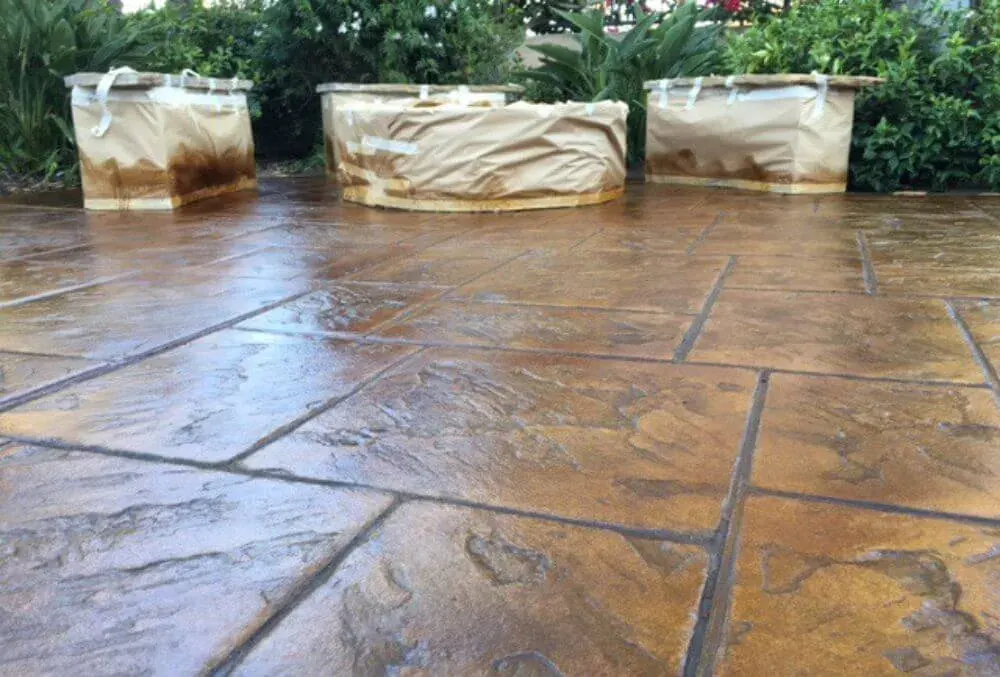
How acid stain works
Acid stain is a mix of metallic salts and a mild acid. When it hits the slab, it reacts with the lime in the concrete and leaves color that is part of the surface, not a coat sitting on top. No two slabs come out the same, which is the whole appeal. You get swirls, darker patches, and soft variation that reads like leather or natural stone.
The catch is control. Colors are limited to earth tones: tans, browns, rusty reds, and blue-greens. Old patches, sealer residue, and trowel marks all show through. Acid stain also needs a careful neutralizing rinse after it reacts, and that rinse water has to be handled properly instead of being washed into the storm drain.
How water-based stain works
Water-based stain is closer to a thin, see-through paint that soaks into the pores. It does not react with the concrete, so the color you see in the sample is close to what you get. The range is much wider: grays, charcoals, blues, even bright colors if you want them.
It is easier to layer and touch up, and it covers small patches better than acid stain. The trade-off is a slightly flatter look with less natural variation. It also depends more on surface prep, since it needs open pores to soak into.
Water-based stain is also the friendlier pick indoors and in garages, since it has no acid fumes and no rinse water to manage. On a modern home with gray siding and black trim, a charcoal or slate water-based color often fits better than the warm browns acid stain gives.
| Factor | Acid stain | Water-based stain |
|---|---|---|
| Color range | Earth tones only | Wide, from soft grays to bold colors |
| Look | Mottled, stone-like variation | More even, more predictable |
| Hides patches | Poorly; patches show | Better; can be layered |
| Process | React, neutralize, rinse, seal | Clean, apply, seal |
| Best fit | Patios, porches, entry slabs | Garage floors, modern patios, color matching |
Acid vs water-based at a glance
This is the comparison we walk owners through when they are choosing a stain for a patio, porch, or garage floor.
Prep and sealing
Stain is only as good as the surface under it. New concrete needs to cure about four weeks before staining. Older slabs need a deep clean to remove grease, curing compound, and old sealer, or the stain will not take in those spots.
Then comes sealer. Every stained slab outdoors needs one. Sealer locks in the color, blocks UV fade, and keeps out stains from grills, leaves, and pool chemicals. Sealing runs $1 to $3 per square foot. Outdoor stained concrete in full sun should be resealed every two to three years. Our sealing service covers that work.
Pick the sheen with care. A wet-look sealer makes colors pop but adds slip and shows scuffs. A matte or satin sealer looks more natural and stays safer underfoot. On stamped and stained patios, we usually go with a low sheen and add grit.
- Clean: degrease and pressure wash, then let the slab dry fully.
- Test: try the stain on a hidden spot to check the color.
- Apply: spray or brush in thin coats, working in sections.
- Neutralize and rinse (acid stain only), then let it dry.
- Seal: two thin coats, with grit added on patios and pool decks.
Staining in Texas heat
Summer is the hardest time to stain in Little Elm. A slab sitting in July sun can be well over 120 degrees on the surface. Stain flashes off before it soaks in, leaving lap marks and blotches. Sealer can bubble, blush, or stay tacky.
Here is how we handle it. We start at first light while the slab is cool, and we stop once the sun is on it. We work shaded sections first and save the open ones for the next morning if needed. We check the forecast for rain, since stain and sealer both need dry hours to set. Spring and fall give the best results, and we nudge owners toward those months when the schedule allows. More on timing is in our guide to pour timing.
Next steps: decide whether you want natural variation or even color, then call (469) 430-2766. We will bring samples and test them on your slab before we stain the whole thing.
Common questions
Can you stain old concrete?
Yes, if it is clean and sound. Stain does not hide cracks or patches. On a worn or patched slab, a resurfacing overlay first can give you a fresh, even surface to stain.
How long does stained concrete last?
The color itself lasts for years since it is in the surface. The sealer on top wears faster, especially outdoors. Resealing every two to three years keeps the color from fading.
Is stained concrete slippery?
Stain alone does not change the grip. A glossy sealer can make it slick when wet, so we add a fine grit to sealer on patios, porches, and pool areas.
Can I stain my own patio?
You can, but water-based stain is far more forgiving for a first try. Acid stain needs careful handling, neutralizing, and rinsing, and mistakes are hard to undo.